A recent comment on one of my posts raised a question that I knew would eventually lead to debate:
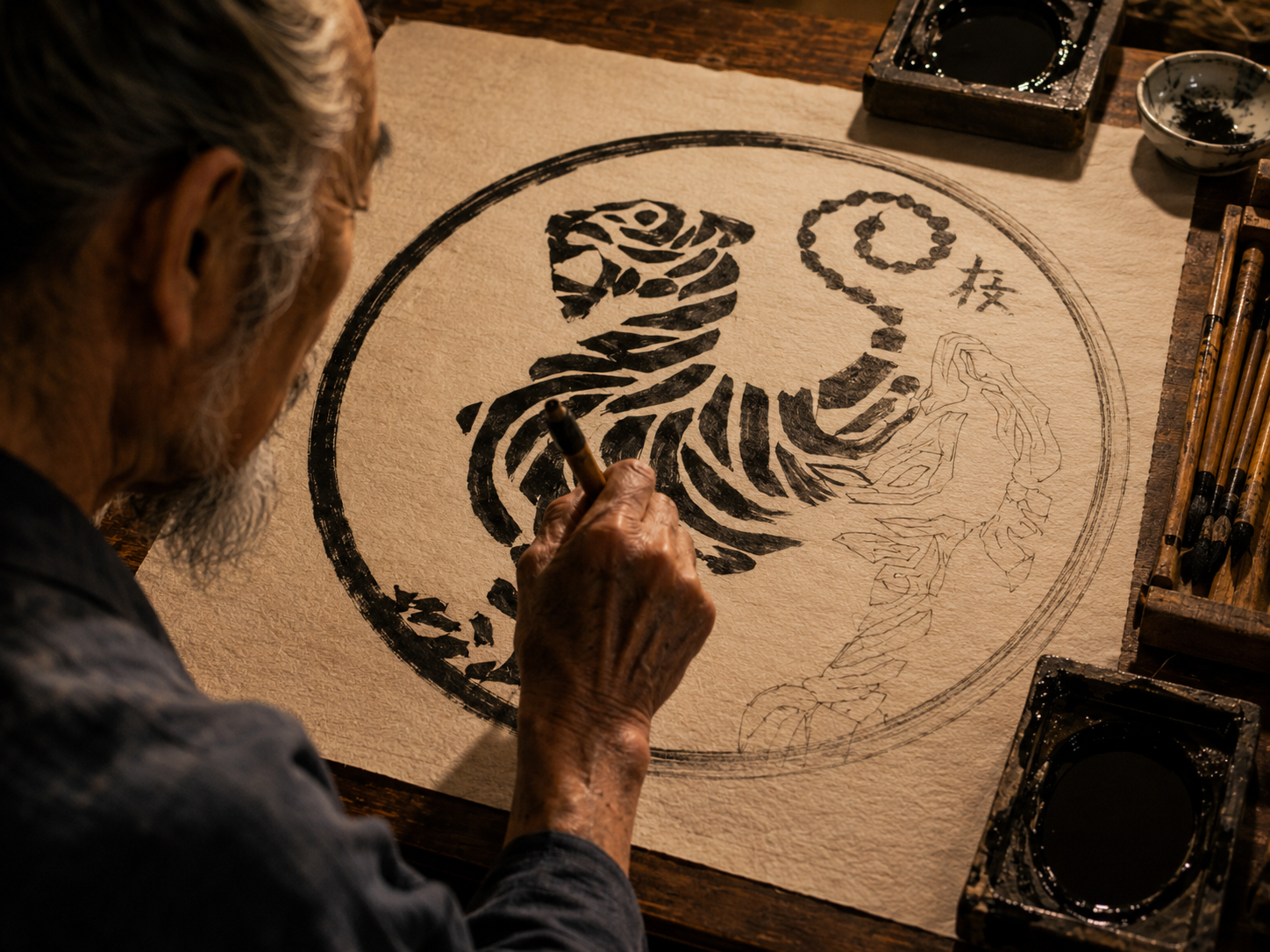
Was Kosugi Hōan’s famous tiger really created for Funakoshi Gichin’s first book in 1922, or was it designed for Karate-Dō Kyōhan in 1935?
The most widely accepted version among karate practitioners today connects the famous tiger with Karate-Dō Kyōhan, published in 1935. There are good reasons for this association, and Japanese institutional sources explicitly connect Kosugi with a tiger design for that later work.
However, the story is not quite so simple.
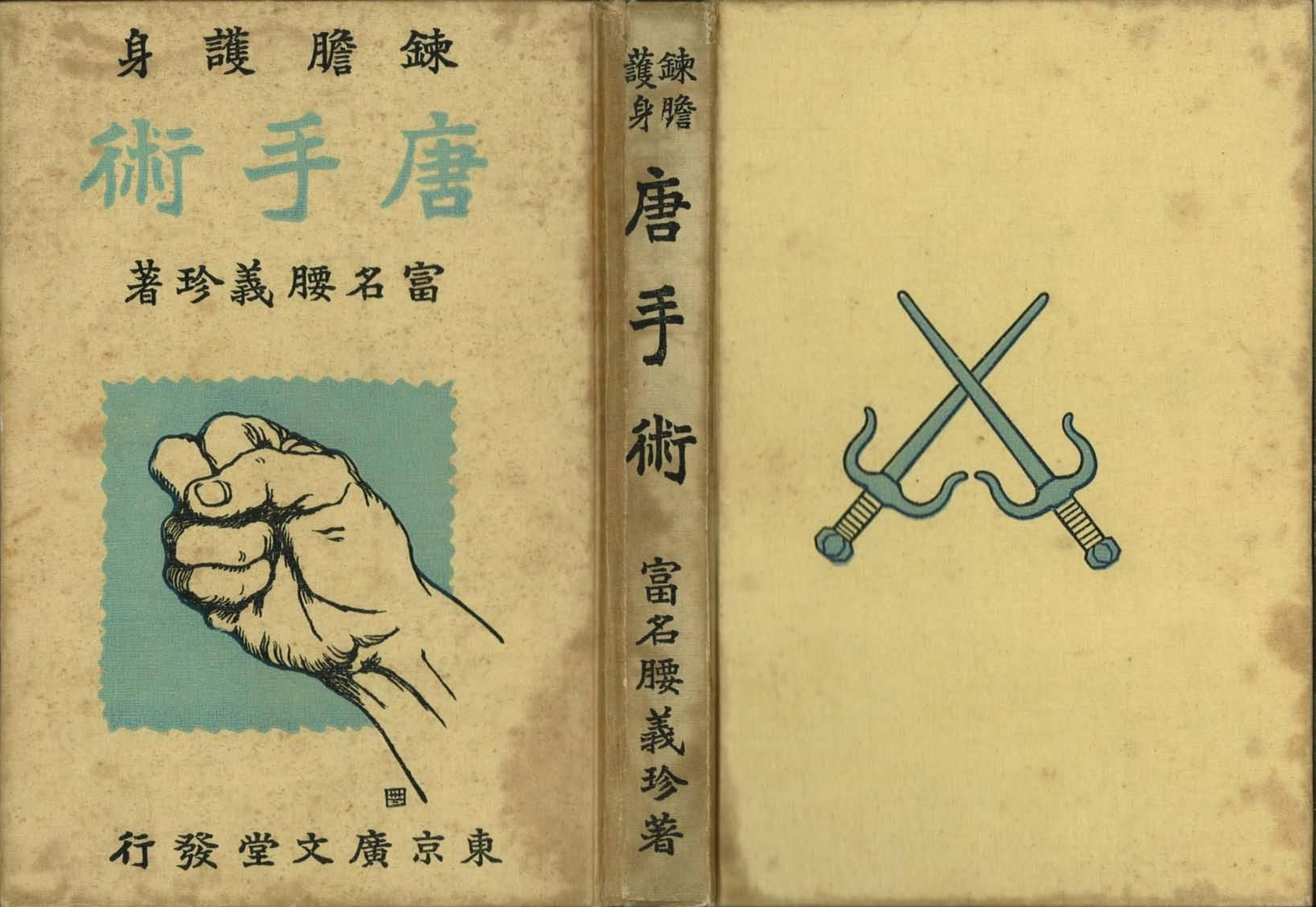
Several very specific sources state that the tiger had already appeared in connection with Funakoshi’s first book, Ryūkyū Kempō: Karate, published in 1922.
Shotokai.com states directly that the tiger symbol was placed by Kosugi Hōan on the cover of Funakoshi’s first book in 1922. The World Shotokan Karate-dō Federation Australia gives the same account, stating that Kosugi designed the cover and that it displayed what is now known as the famous Shotokan tiger. Other Shotokan historical sources repeat this version and explicitly date the tiger’s first appearance to 1922.
According to this tradition, Kosugi encouraged Funakoshi to write the first book on karate and offered to take responsibility for its design. The tiger was linked to the expression tora no maki, meaning the definitive or authoritative text of an art. Since tora also means “tiger,” the image became a visual play on words: Funakoshi’s book was to be the tora no maki of karate.
But there is another side to the story.
The official chronology of the Kosugi Hōan Museum of Art confirms that Kosugi was involved with Funakoshi in 1922 and that Ryūkyū Kempō: Karate was published at his recommendation and with his artistic involvement in the book’s design. Yet the same institutional chronology explicitly records a tiger design in connection with Karate-Dō Kyōhan in 1935.
This creates an important historical question.
Did Kosugi create an earlier version of the tiger for the 1922 book and later produce another design for the 1935 publication? Did the symbol evolve over time? Or have later accounts projected the famous 1935 tiger backwards onto the first book?
The problem is made more difficult by the fate of the original 1922 publication. The printing materials associated with Funakoshi’s first book were lost following the Great Kantō Earthquake of 1923, which led to a later and substantially revised publication. The surviving evidence must therefore be examined carefully, especially when modern reproductions, later editions, and historical accounts are compared.
This is precisely why I mentioned 1922 in my original article.
It was not because I was unaware of the well-known association between the tiger and Karate-Dō Kyōhan. On the contrary, I knew that the statement would generate debate. I included it because several specific sources explicitly place the tiger in 1922, and I believe these sources deserve to be discussed rather than simply ignored.
At the same time, historical research requires caution. The existence of sources repeating the 1922 version does not automatically settle the question, just as the documented connection with the 1935 book does not necessarily prove that no earlier version of the tiger existed.
For now, the most accurate conclusion may be this:
Kosugi Hōan’s involvement with Funakoshi’s first book in 1922 is documented. Several specific karate sources state that the tiger appeared on that book. Japanese institutional sources, however, explicitly document a tiger design in connection with Karate-Dō Kyōhan in 1935.
The question therefore remains worthy of further investigation.
And perhaps that is the most interesting part of historical research: sometimes the familiar story is only the beginning of the discussion.
Sources
Sources supporting the 1922 version
Shotokai — The History of Master Funakoshi’s Personal Symbol
https://shotokai.com/tiger/
World Shotokan Karate-dō Federation Australia — The Tiger Symbol of Shotokan Karate
https://www.wskf.com.au/martial-arts-concepts/tiger-symbol-shotokan-karate/
Shotokan Karate CSL — The Shotokan Tiger
https://shotokankaratecsl.com/Info%20-%20Home%2002%20-%20Shotokan%20-%20Shotokan%20Tiger.html
Okuden Shotokan — The Shotokan Tiger
https://okuden-shotokan.club/the-shotokan-tiger/
Japanese institutional source
Kosugi Hōan Museum of Art — Official Biography and Chronology
https://www.khmoan.jp/khmoan/biography.html
Digitized 1922 publication record
Ryūkyū Kempō: Karate (1922), digitized from the National Diet Library of Japan
https://commons.wikimedia.org/wiki/File:NDL971654_唐手_-_琉球拳法_part1.pdf