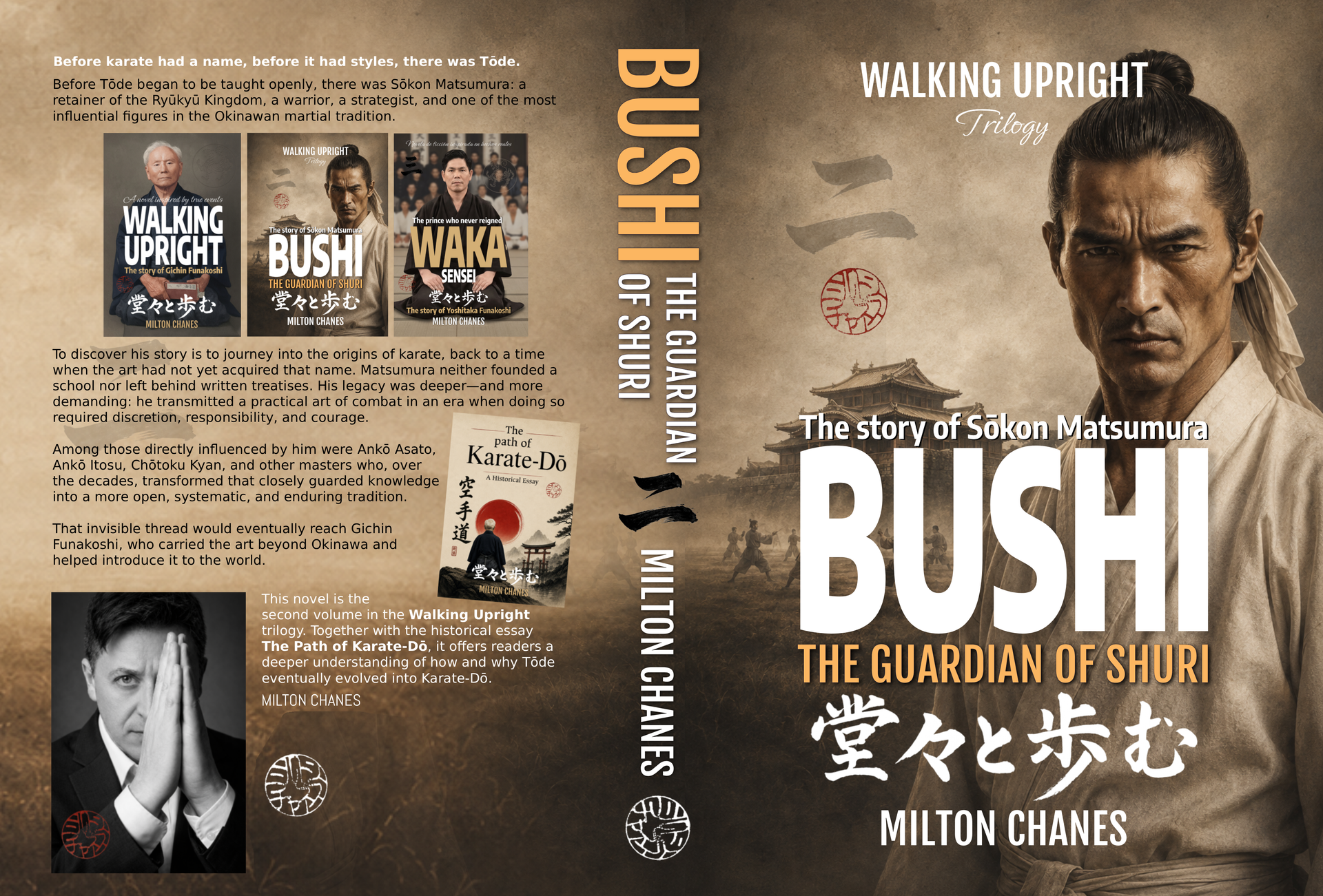
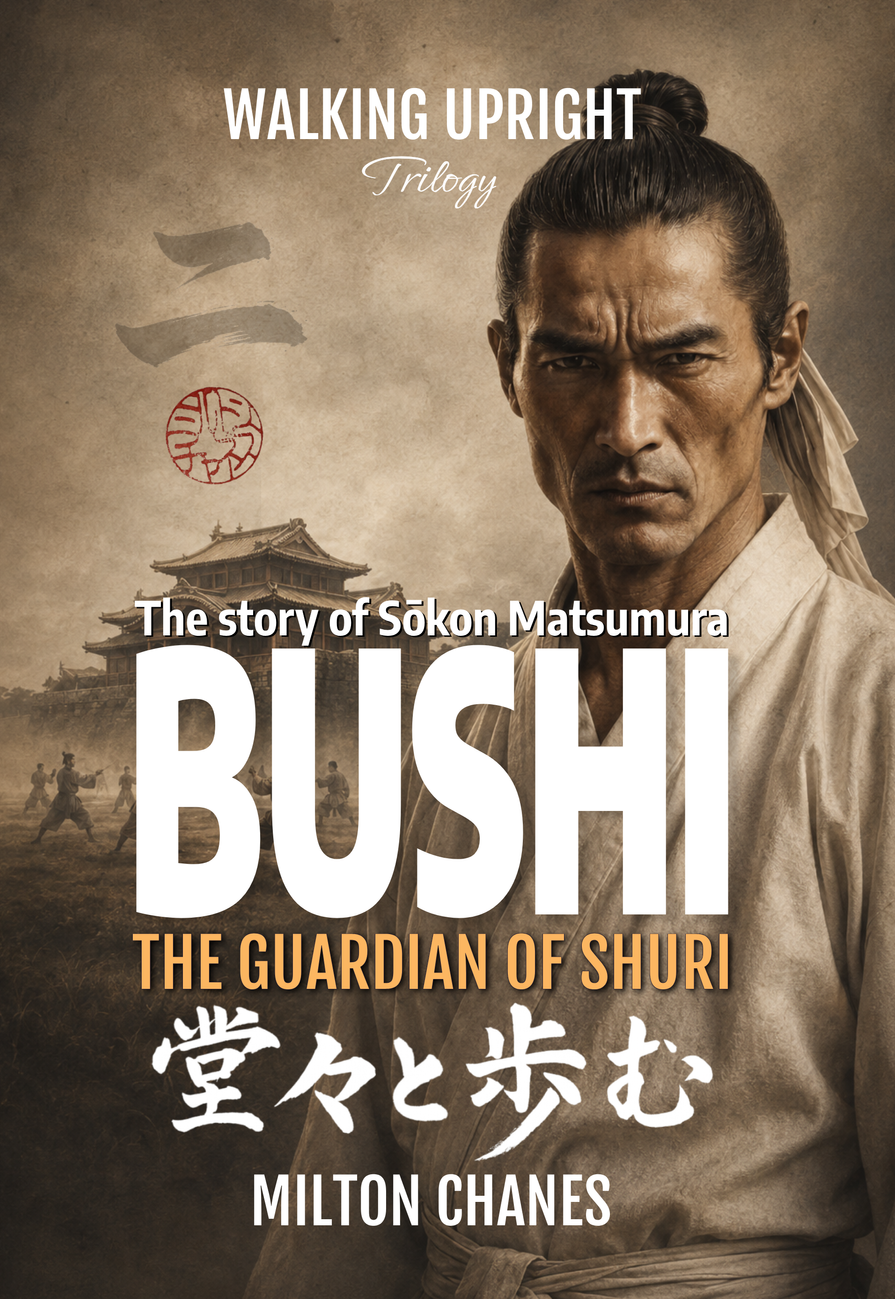
Before karate was known as Karate-Dō, before it reached Japanese universities, and even before it became a discipline practiced throughout the world, there existed an ancient, silent art deeply connected to the history of Okinawa.
For generations, that art was known as Tōde.
And among the great names who shaped that tradition, one stands out with particular strength: Matsumura Sōkon.
Bushi was born from the desire to tell his story.
Matsumura Sōkon was not simply a martial arts master. He was a man shaped by a complex era, in which the Ryūkyū Kingdom existed between Chinese, Japanese, and Okinawan influences. His life unfolded in a world where diplomacy, loyalty, honor, and survival were all part of the same reality.
In the service of the kings of Ryūkyū, Matsumura became a respected figure not only for his physical skill, but also for his character, his discipline, and his deep understanding of the art. Tradition remembers him as an exceptional warrior, but also as a teacher capable of transmitting something far more important than technique: a way of facing life.
That is why the title Bushi does not speak only of a fighter. It speaks of an attitude. Of a way of being in the world. Of the inner firmness of someone who learns to control his strength, master his fear, and act with dignity even in difficult times.
The novel enters an Okinawa that existed before modern karate, when the art was still transmitted privately and the great masters were known more for their actions than for their words. In that context, Matsumura Sōkon represents a bridge between the warrior past of Ryūkyū and the later evolution of Tōde into what, many decades later, would be called Karate-Dō.
Bushi is not intended to be only a novel about martial arts. It is a story about identity, duty, tradition, and transformation. Through Matsumura’s life, the reader is brought closer to a world where every gesture carried meaning, where teaching could not be separated from character, and where true mastery began long before combat.
Within its pages are the echoes of the palaces of Shuri, the political tensions of the old kingdom, the influence of China, the presence of Japan, and the slow formation of a martial tradition that survived through transmission from master to disciple.
Matsumura Sōkon was one of the deepest roots of that tradition. His legacy would influence later generations and reach, directly or indirectly, fundamental figures such as Ankō Itosu, Ankō Asato, and Gichin Funakoshi. Without Matsumura, the history of karate could not be understood in the same way.
Within the trilogy, Bushi occupies an essential place. If Walking Upright follows the life of Gichin Funakoshi and the moment when the art of Okinawa began to make its way to Japan, Bushi looks further back, toward the roots. Toward the time when spirit, technique, and loyalty were still tied to the world of the old Ryūkyū.
The novel invites the reader to discover not only who Matsumura Sōkon was, but what he represented. Because behind the myth of the great master lies a deeper question: what does it truly mean to be a bushi?
The answer is not found only in strength, victory, or reputation. It is found in silent discipline, in loyalty to one’s principles, in respect for tradition, and in the ability to remain firm when history changes around us.
Bushi is a novel about origin. About the weight of inheritance. About a man who helped preserve an art that, over time, would transform the lives of millions of people.
Because before modern Karate-Dō, there were masters who walked in silence.
And among them, Matsumura Sōkon holds an immortal place.