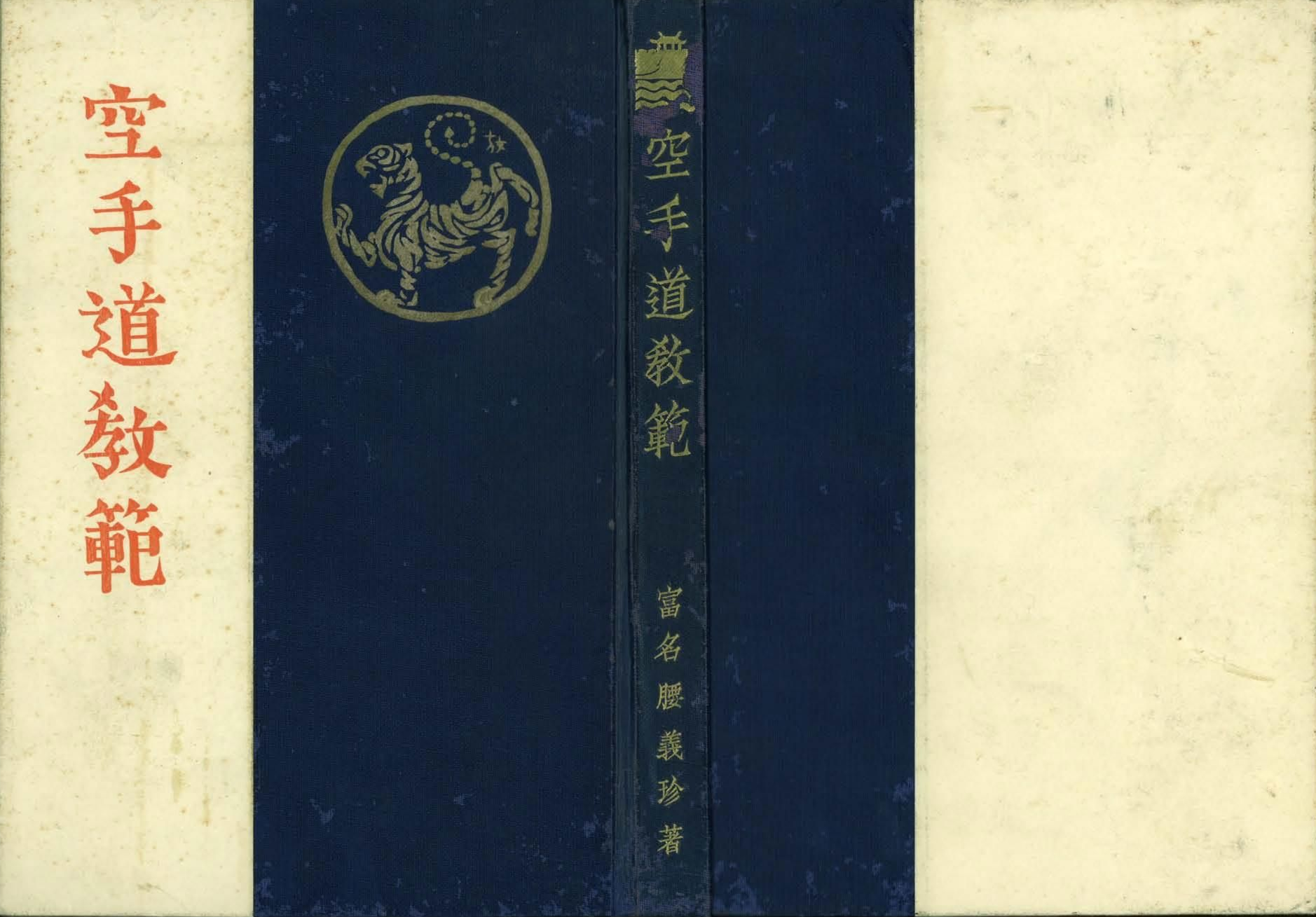
In 1935, one of the most important books in the history of modern karate was published: 『空手道教範』 (Karate-dō Kyōhan), written by Funakoshi Gichin (1868–1957). However, this famous work was not the beginning of Funakoshi’s literary contribution. It was the result of more than a decade of effort dedicated to introducing Okinawan karate to mainland Japan.
The history of Funakoshi’s publications begins in 1922, the year when he traveled to Tokyo at the invitation of the Japanese Ministry of Education to participate in the First National Physical Education Exhibition held in Ochanomizu. This event marked a turning point, as it was the first official presentation of Okinawan martial art to a Japanese audience outside Okinawa.
Following this presentation, Funakoshi published his first book: 『琉球拳法 唐手道』 (Ryūkyū Kenpō Karate-dō), commonly translated as Ryukyu Kempo: Karate-dō. This was the first major written work introducing the art of Okinawa to Japan. The book was carefully prepared with the support of people who helped Funakoshi during his early years in Tokyo, including assistance with its organization, design, and publication.
Unfortunately, this first edition had a very short life. In September 1923, the Great Kantō Earthquake devastated Tokyo and Yokohama, destroying countless buildings, documents, and cultural materials. Many of the original copies of Funakoshi’s 1922 book were lost, making surviving examples today extremely rare historical treasures.
Because of this loss, Funakoshi later prepared a new version of his work. In 1925, the book was republished under the title 『錬胆護身唐手術』 (Rentan Goshin Tōde-jutsu). This edition represented an evolution of his earlier ideas and allowed his teachings to continue spreading among Japanese practitioners. Additional copies and reproductions appeared in the following years, including editions from around 1926, helping preserve Funakoshi’s early explanations of karate.
However, it was not until 1935 that Funakoshi published the work that would become his most famous and influential book: 『空手道教範』 (Karate-dō Kyōhan), “The Master Text of the Way of the Empty Hand.”
Unlike his earlier publications, which were created during the challenging first years of introducing karate to Japan, Karate-dō Kyōhan reflected more than a decade of teaching experience in Tokyo. In this book, Funakoshi presented a more developed vision of karate as a Budō, a martial way dedicated not only to physical technique but also to personal cultivation.
The book includes explanations of fundamental techniques, stances, training methods, principles of combat, and detailed descriptions of kata. It also contains one of the most valuable photographic collections from the early history of karate, with Funakoshi himself demonstrating techniques. These images provide an extraordinary record of karate before many of the technical changes introduced by later generations.
The publication of Karate-dō Kyōhan also reflects the transformation from Okinawan Tōde into Japanese Karate-Dō. The adoption of the character 空手 (empty hand), the incorporation of the concept of Dō (道), and the development of karate within the Japanese educational and martial arts environment were essential steps in the creation of modern karate.
Only one year after the publication of the book, in 1936, the first dedicated Shōtōkan dōjō was officially opened in Tokyo. Therefore, Karate-dō Kyōhan can be seen as both a culmination of Funakoshi’s first fourteen years in Japan and a bridge toward the future development of the style that would later bear his name.
Today, nearly a century later, Karate-dō Kyōhan remains one of the most important historical documents for understanding Funakoshi’s karate. Yet its true story begins with the almost forgotten 1922 edition — a pioneering book that introduced Okinawan karate to Japan, disappeared in the tragedy of the Kantō Earthquake, and paved the way for all the works that followed.
The 1935 edition can be consulted online through Internet Archive:
Read Karate-dō Kyōhan by Gichin Funakoshi on Internet Archive:
https://archive.org/details/karate-do-kyohan
Studying these books allows us to follow the transformation of an Okinawan fighting art into Karate-Dō: a journey shaped by teachers, students, historical events, and the vision of a man who dedicated his entire life to transmitting the Way of the Empty Hand.